THE USO TURNS 85: THE HISTORY OF THE UNITED SERVICES ORGANIZATION FROM 1941 TO TODAY
It started with a handful of charities and non-profits. Gathered together in New York City, representatives from the Salvation Army, the Young Men’s Christian Association (YMCA), the Young Women’s Christian Association (YWCA), the National Catholic Community Service, the National Travelers Aid Association, and the National Jewish Welfare Board met several times in late 1940 and early 1941 to discuss how they could support America’s military. While the US was not yet fighting in the then-ongoing Second World War, these groups, who had all offered support and services to troops during the First World War, wanted to be prepared.
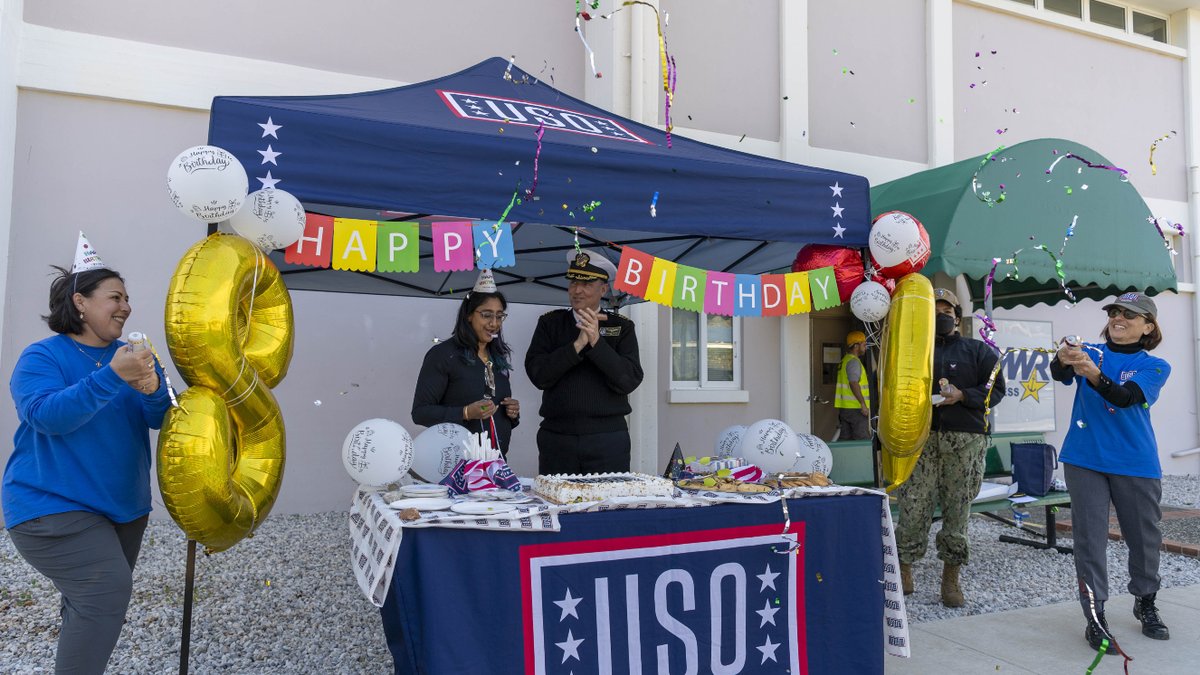
They eventually met with President Franklin Roosevelt and military leaders in January of ’41 to discuss their ideas for aiding the men and women of the Armed Forces. Roosevelt recommended they start a new organization that would offer American troops all sorts of morale-boosting resources and services. As a result of that meeting, that alliance of service-providing groups founded the United Services Organization (USO) on February 4th, 1941. With the 85th birthday of this helpful and historic organization approaching, now is a fine time to look back on the USO and the ways it's helped generations of Americans serving in uniform.

The Birth of the USO and World War II
Initially, the USO operated out of whatever locations it could. Train stations, houses of worship, shops, even barns became places where American troops could stop by for a rest, some food or drink, have their clothes mended, listen to music, and even pick up free stationery to write back home with.
It soon created a new program, Camp Shows Inc., which sent performers on tours to entertain the troops. Among the many celebrities who hit the road on these tours was the late, great Bob Hope, a man who became all but synonymous with the organization, who performed in his first USO show in May of 1941.
After America officially declared war against the Axis Powers in the wake of the Attack on Pearl Harbor on December 7th, 1941, the USO expanded exponentially. At its peak, the organization operated over 3,000 locations, and over the course of the war, more than a million people volunteered in one way or another
Once American Soldiers, Sailors, Marines, and Coast Guardsmen began shipping out to combat zones, the USO expanded their presence overseas, setting up facilities wherever US forces went. The programs put on by Camp Shows Inc. also expanded into the active theaters of war.
The USO held its first overseas show in North Africa, featuring one of the organization's most prolific entertainers of troops: the German-born, virulently anti-Nazi, Academy Award-winning actress Marlene Deitrich. For the entirety of the war, USO volunteers and entertainers followed American forces wherever they went to continue offering support, supplies, and entertainment. Within a month of US troops storming the shores of Normandy, France, on June 6th, 1944, the USO had already put on a show on the sands of Utah Beach. By the time WWII ended on September 2nd, 1945, Camp Shows Inc. had put on over 300,000 performances at home and abroad.
The USO’s “Honorable Discharge” and Reactivation
The contributions of the United Service Organization to the morale and welfare of the American Soldiers, Sailors, Marines, and Coast Guardsmen who served in the Second World War were immeasurable and invaluable. General (and future 4th President of the United States) Dwight Eisenhower himself declared, “The USO has given an impressive demonstration of the way people in our country of different creeds, races, and economic status can work together when the nation has dedicated itself to an all-out, integrated effort.”
But despite their work, the future of the USO looked questionable in the aftermath of the conflict. President Harry Truman even went so far as to symbolically award the organization an Honorable Discharge in 1947, ostensibly ending its service to the country. But the story does not end there. The USO continued to operate a number of facilities across the country and continued to provide comfort and entertainment to troops, in particular those still recovering from serious wounds suffered during the war. By February of 1949, Truman reevaluated his decision and formally reactivated the organization. And not a moment too soon; less than a year and a half later, America was again at war.

The USO From the Cold War to the Present
On June 25th, 1950, the armed forces of communist North Korea invaded South Korea, setting off the first armed conflict of the Cold War. A coalition of United Nations military forces, mostly consisting of US troops and under the overall command of General Douglas MacArthur, rushed to the aid of the South Koreans. The USO sprang into action once more, sending celebrities to entertain the forward deployed throughout the conflict. As the decades of the Cold War rolled on and sparked further armed struggles, the organization kept up its good work.
When the United States formally embroiled itself in the Vietnam War after the 1964 Gulf of Tonkin Incident, the first major troop formations arrived in the country to find the USO already there: they’d opened a location in the city of Saigon the year before. Over the course of America’s second-longest military campaign to date, the USO operated 23 facilities across South Vietnam and Thailand and continued sending celebrities of all stripes to entertain military personnel.
In December of 1964, Bob Hope hosted his very first “Bob Hope USO Christmas Show,” a star-studded revue for the American Soldiers, Sailors, Marines, Airmen, and Coast Guardsmen deployed to the war-torn country. Hope made it an annual tradition, putting on a Christmas extravaganza for American troops through the end of the war and beyond (he hosted his last one in 1990 at the age of 87).
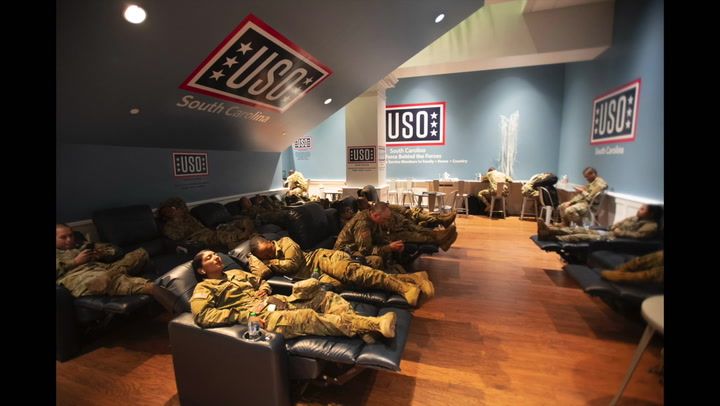
As the Cold War wound down and came to an end in the final decades of the twentieth century, the USO continued to serve those in service. They remained a familiar sight on bases, in military towns, wherever American troops served and/or fought overseas, and in major airports across the country where they operate lounges open to all active duty, reserve, and National Guard servicemembers. With the start of the Global War on Terror after the tragic attack on September 11th, 2001, the US military entered into multiple new and lengthy conflicts.
In turn, the USO continued to modernize and expand: setting up facilities with free Wi-Fi, giving out phone cards, and helping deployed troops read bedtime stories to their children from multiple continents and time zones away. All while continuing to send iconic celebrities and entertainers to boost the morale of those on or near the front lines.
As a matter of fact, the USO allowed this humble writer to meet one of his all-time idols thanks to a USO tour that sent a popular comedian/TV host, an NBA Hall of Famer, and one of the world’s most famous magicians (a triad of identities that, admittedly, sounds like the setup to a convoluted joke) to a number of bases across Afghanistan in 2011.

Happy Birthday to the USO!
For over eight decades, the sight of that iconic, red-bordered blue rectangle bearing the letters “USO” in bold white has filled American men and women in uniform with hope and happiness. At home and abroad, the employees and volunteers of the United Services Organization remain as dedicated to bolstering the morale and welfare of our Soldiers, Sailors, Marines, Airmen, Coast Guardsmen, and Space Guardians as their earliest predecessors did during the Second World War. And for that, we thank them, we salute them, and we wish them a happy birthday.
Suggested reads:
Watch the Video
Join the Conversation
Paul Mooney
Veteran & Military Affairs Correspondent at MyBaseGuide
Paul D. Mooney is an award-winning writer, filmmaker, and former Marine Corps officer (2008–2012). He brings a unique perspective to military reporting, combining firsthand service experience with exp...
Paul D. Mooney is an award-winning writer, filmmaker, and former Marine Corps officer (2008–2012). He brings a unique perspective to military reporting, combining firsthand service experience with exp...
Credentials
- Former Marine Corps Officer (2008-2012)
- Award-winning writer and filmmaker
- USGS Public Relations team member
Expertise
- Military Affairs
- Military History
- Defense Policy
SHARE: