
BUDGET COMMITTEE SENATORS REQUEST DETAILS ON CLASSIFIED DOD BUDGET SUBMITTAL
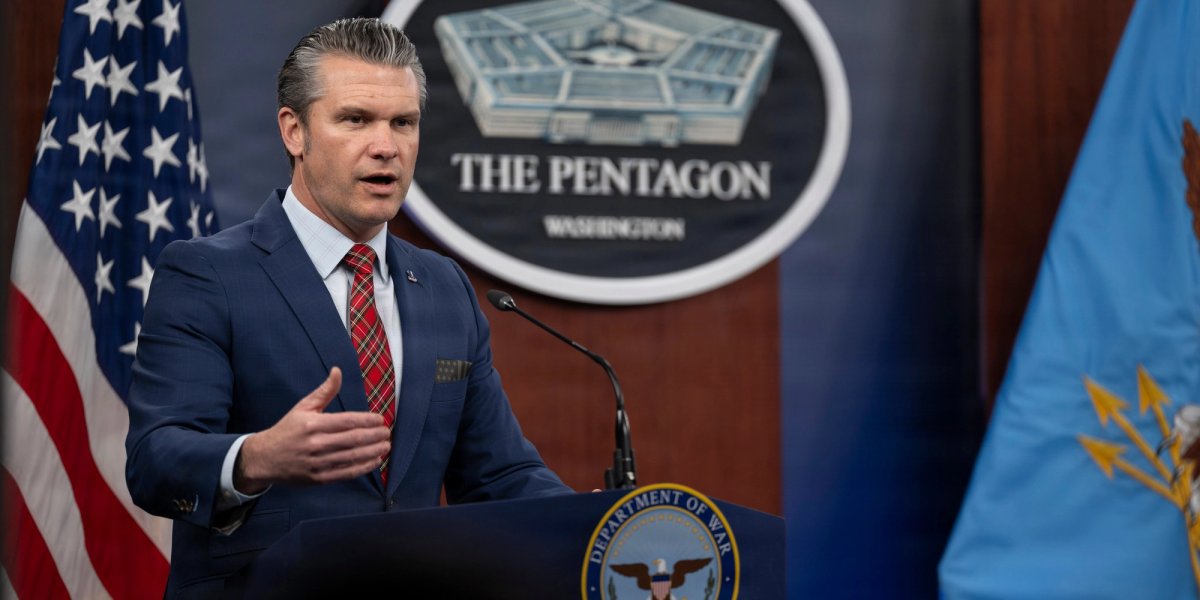
A letter from ten U.S. senators on the Senate Budget Committee has questioned the Secretary of Defense on the decision to classify large portions of the Pentagon’s spending plan. At issue is a reported $90 billion spending plan that was submitted to Congress in classified form, along with an estimated $60 billion that has not yet been fully disclosed. While classified budgeting is routine in national security, federal law and long-standing practice require the Department of Defense to provide Congress with full briefings through appropriate secure channels.
There is always give and take between Congress and the Executive Branch. This letter is unusual in one respect: it comes from the committee’s minority rather than from the committee as a whole. In most cases, formal oversight inquiries involving major budget issues are bipartisan and signed by both the chair and ranking member.

National Security and the Limits of Classification
The Department of Defense has emphasized the need to protect sensitive military and intelligence programs. While DoD budgets routinely contain classified line items, those items are not typically withheld from congressional oversight.
Members of Congress with relevant responsibilities receive security clearances and have access to secure facilities on Capitol Hill for reviewing classified materials.
Congressional Authority and Legal Requirements
Under Article I of the U.S. Constitution, Congress holds the power of the purse. No federal funds may be spent without legislative authorization, and lawmakers retain the right to oversee how appropriated money is used.
Federal law also requires the Department of Defense to submit detailed justification materials in support of its funding requests. These materials are traditionally divided into unclassified budget documents and classified annexes. The law does not envision a system in which major portions of spending are withheld entirely. Instead, it assumes disclosure through appropriate classified channels.
A range of federal statutes governs how the executive branch spends appropriated funds. The Anti-Deficiency Act requires that expenditures align with congressional authorization, while the Federal Acquisition Regulation governs how the Department purchases goods and services. Together, these rules are designed to ensure that defense spending remains transparent to authorized oversight bodies.

Oversight Beyond Congress
Oversight is reinforced through independent watchdogs. The Government Accountability Office and the Department of Defense Inspector General are authorized by law to review classified programs. Using secure procedures, they conduct audits and investigations that supplement congressional review and provide additional layers of accountability.
Defense officials routinely note that classification is essential for protecting operational details, intelligence sources, weapons development, and partner relationships. Public disclosure of such information could expose vulnerabilities or provide advantages to adversaries. For this reason, Congress has long supported the use of classified annexes and closed briefings within the Pentagon spending plan process.
The central challenge is maintaining the balance between security and transparency. Classification is intended to protect sensitive information, not to limit lawful oversight. Historically, disagreements over disclosure have been resolved through additional briefings, revised submissions, or expanded access for cleared staff.
Importantly, current concerns about the $90 billion spending plan do not necessarily indicate unlawful or unethical conduct. Partial submissions may reflect ongoing program development, security reviews, or administrative delays. In many cases, classified materials are supplemented later as projects mature and documentation is finalized. Federal law anticipates that incomplete submissions will eventually be updated through secure channels.
For uniformed leaders and civilian officials alike, compliance with oversight requirements serves as a form of institutional protection. Detailed records of how funds are used help demonstrate adherence to congressional directives and reduce legal and political risk.
Paths Toward Resolution
Looking ahead, established processes exist to address outstanding questions about Pentagon classified spending. Committees may request closed hearings, inspectors may conduct audits, and supplemental reports may be issued.
Historically, these tools have resolved most disputes without public confrontation.
Suggested reads:
Join the Conversation

Mickey Addison
Military Affairs Analyst at MyBaseGuide
Mickey Addison is a retired U.S. Air Force colonel and former defense consultant with over 30 years of experience leading operational, engineering, and joint organizations. After military service, h...
Mickey Addison is a retired U.S. Air Force colonel and former defense consultant with over 30 years of experience leading operational, engineering, and joint organizations. After military service, h...
Credentials
- PMP
- MSCE
Expertise
- defense policy
- infrastructure management
- political-military affairs
SHARE: