BASE MOBILITY 2.0: HOW MICROTRANSIT IS REPLACING “JUST WALK” CULTURE ON MILITARY BASES
For decades, getting around a military installation followed an unspoken rule: if you didn’t have a car, you walked.
Now, that expectation is evolving throughout military communities.
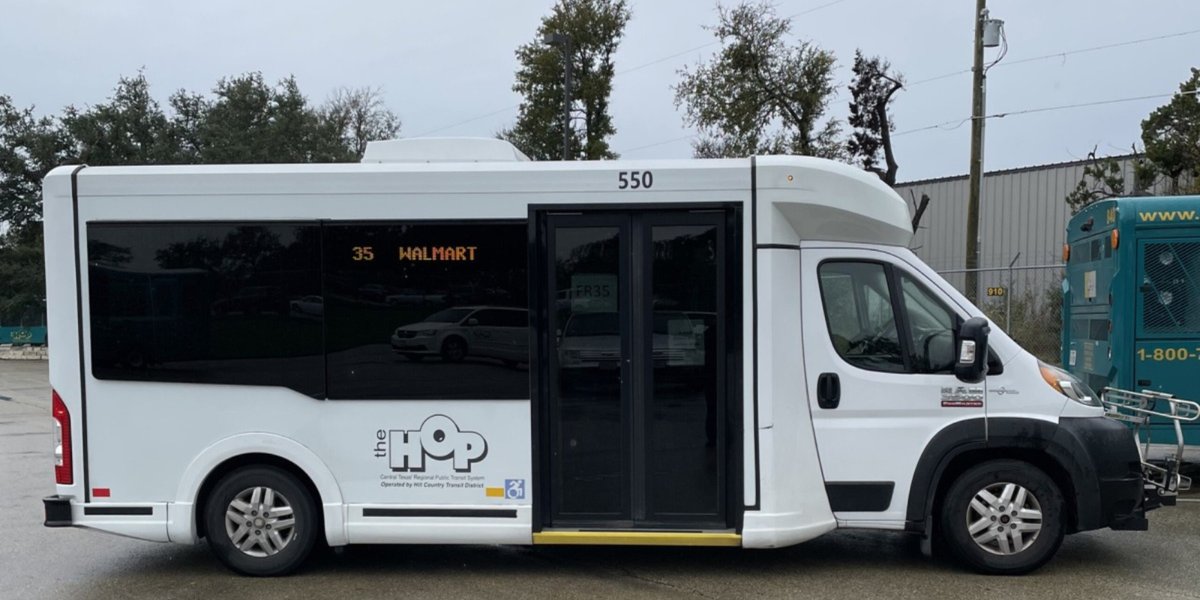
At Fort Hood, microtransit is now operational, moving service members and families between barracks, clinics, housing, and Soldier services via app-based, on-demand shuttles.
This transition is more than a matter of convenience. It underscores that effective, dependable transportation is essential for access, readiness, and daily military operations.
What Microtransit on Military Bases Actually Is
Microtransit uses technology so riders request shared trips within set zones. Routes are made based on real-time demand, not fixed schedules.
On bases, microtransit replaces informal solutions such as walking far, relying on rides, or skipping appointments with a supported transportation system.
So, instead of telling people to simply “figure it out,” or “make it work,” microtransit provides a coordinated solution.

Fort Hood Shows What This Shift Looks Like in Practice
Fort Hood launched the Cavazos Connector in March 2024 as a two-part transportation network:
- On-demand microtransit vans serving designated service zones
- A fixed-route circulator shuttle linking high-traffic hubs, including the Soldier Service Center, Carl R. Darnall Army Medical Center, and the Visitor Welcome Center
Riders request trips by smartphone app or phone, a practical option for those without reliable data. The free service is for authorized users.
Jerry Stephens, deputy at Army Field Support Battalion–Hood, said the garrison deliberately moved away from traditional shuttle thinking.
“We broke from the normal thought process of a shuttle on a military installation,” Stephens said. “They had this new concept called microtransit, and they have been the key to this success.”
Early Adoption Shows Real Demand, Not a Niche Perk
In its first year, the Cavazos Connector exceeded expectations for use and reliability.
Army reporting shows tens of thousands of rides completed and hundreds of thousands of miles traveled in the program’s first year, alongside strong on-time performance and customer satisfaction rates.
Derek Czapnik, Director of Operations for Hill Country Transit District, which partnered on the system, said the response was immediate.
“It was instantly successful,” Czapnik said. “It exceeded expectations the first month and continues to be that way.”
These numbers matter because distance on base affects making appointments, accessing services, and staying on schedule.
Who Microtransit Actually Serves and Why It Matters
While open to a broad base population, microtransit on military bases is designed with specific realities in mind.
Col. Lakicia Stokes, commander of U.S. Army Garrison–Fort Hood, emphasized that many service members arrive without personal transportation.
"With many single Soldiers arriving without a vehicle and families often sharing a single car, the Cavazos Connector reduces transportation barriers. It improves access to recreational and essential services, supporting Soldiers and families without added financial strain," Stokes said.

For junior enlisted service members, especially those living in the barracks, that access translates into:
- Reaching medical appointments during duty hours
- Accessing Soldier services without relying on informal ride networks
- Navigating large installations where essential facilities may be miles apart
Staff Sgt. Matthew Johnson of the 11th Signal Brigade described the impact he’s seen so far.
“It goes beyond mere convenience,” Johnson said. “It enables Soldiers to fulfill their duties effectively and helps families stay connected.”
Why Installations Are Rethinking Transportation Now
The move toward app-based shuttles isn’t happening in isolation. Several pressures are converging:
- Large installations with increasingly decentralized services
- More single-vehicle households on base
- Heightened attention to quality-of-life factors tied to retention
- Security and access controls that complicate off-base ride-sharing
- Transit technology that can now scale affordably on demand
Together, these factors shift transportation from a personal issue to a formal planning matter.
Microtransit offers flexible, cost-effective transportation tailored to demand. This model increases mobility and access without the expense and rigidity of traditional bus systems.
Not every installation has adopted microtransit yet, but more are evaluating similar models. If yours hasn’t implemented microtransit on-post, ask your command if it’s in the foreseeable future.
Getting Around the “Just Walk” Culture
For years, long walks across base were treated as normal, especially for junior enlisted service members without cars. Microtransit on military bases challenges that assumption by treating mobility as infrastructure rather than improvisation.
Fort Hood is an early example, but likely not the last. As distance, access, and quality of life persist, app-based shuttles are a practical solution to problems service members once had to manage alone.
FAQs: Microtransit on Military Bases
Is microtransit free on base?
At Fort Hood, the service is provided at no cost to authorized riders.
Do I need a smartphone to use it?
No. Phone scheduling is available for riders without app access.
Who can ride?
Eligibility is installation-specific and typically includes service members, families, and other authorized populations.
Does microtransit replace base shuttles?
In most cases, it supplements fixed-route circulators rather than replacing them entirely.
Suggested reads:
Join the Conversation

Natalie Oliverio
Veteran & Senior Contributor, Military News at MyBaseGuide
Natalie Oliverio is a Navy Veteran, journalist, and entrepreneur whose reporting brings clarity, compassion, and credibility to stories that matter most to military families. With more than 100 publis...
Natalie Oliverio is a Navy Veteran, journalist, and entrepreneur whose reporting brings clarity, compassion, and credibility to stories that matter most to military families. With more than 100 publis...
Credentials
- Navy Veteran
- 100+ published articles
- Veterati Mentor
Expertise
- Defense Policy
- Military News
- Veteran Affairs
SHARE: