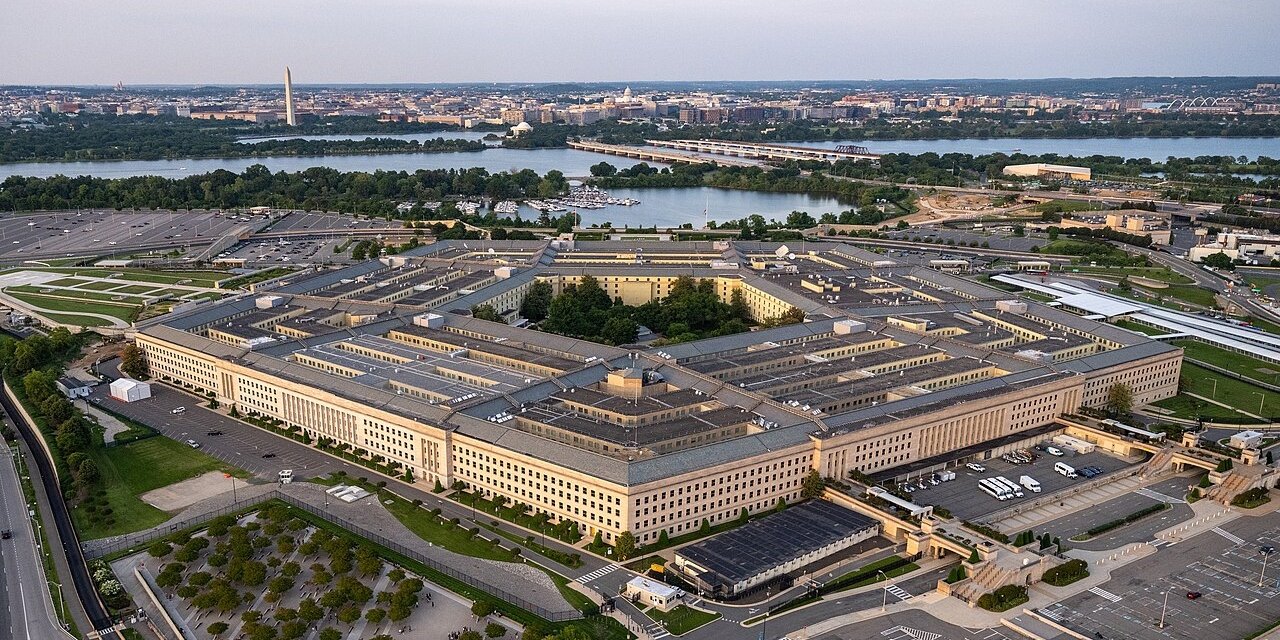
What is the RECEIPTS Act? Explaining the Plan to Audit the Pentagon

Recent commentary surrounding Senator Joni Ernst’s proposed RECEIPTS Act reflects a frustration many Americans share: the United States Department of Defense has not yet received a clean financial audit opinion. After years of effort and substantial investment, that outcome remains disappointing.
Frustration, however, should not lead to oversimplification. The Pentagon’s audit challenges do not primarily reflect an inability to track spending. They stem from longstanding weaknesses in documentation practices, fragmented legacy information systems, workforce shortages in financial management, and organizational complexity.
Congress first established modern federal financial accountability requirements with the Chief Financial Officers Act of 1990, which created agency CFO positions and required audited annual financial statements.
These requirements were reinforced by the Government Management Reform Act of 1994 and the Federal Financial Management Improvement Act of 1996, which strengthened reporting and systems standards. Together, these statutes created the framework that governs financial audits across the executive branch.

What the RECEIPTS Act Is Intended to Do
The RECEIPTS Act seeks to strengthen financial accountability within the Department of Defense by raising qualification standards for financial managers, expanding reporting requirements, mandating the use of Artificial Intelligence (AI) to streamline invoice reviews and audit the books, and setting a hard, legislative deadline of 2028 for the Pentagon to finally achieve a clean audit.
The Pentagon’s inability to obtain a clean opinion is a legitimate concern, and congressional oversight is appropriate. The central question is whether the proposed legislation addresses the underlying causes of audit failure.
A failed audit does not mean that funds are missing. It means that auditors cannot verify transactions and balances through standardized documentation and reconciled systems. In the Pentagon’s case, this problem reflects decades of decentralized system development and incomplete integration.
The Department manages millions of physical assets worldwide through hundreds of legacy systems operated by thousands of subordinate organizations while supporting global operations. Many of these systems were developed independently and cannot reliably exchange or reconcile data. Documentation standards have evolved faster than system modernization.
As a result, auditors frequently encounter incomplete records, fragmented transaction histories, and data inconsistencies. In most cases, the issue is not the absence of assets or expenditures, but the inability to trace them cleanly across multiple systems. This represents a systems integration problem rather than evidence of systemic fraud. Audit readiness efforts have repeatedly documented challenges involving incomplete data fields, mismatched systems, and classification disputes rather than undocumented expenditures.
Audit Failure Is Not Proof of Waste
Public discussion of the RECEIPTS Act frequently cites anecdotes involving questionable research projects, credit card misuse, or isolated procurement errors. In fact, Senator Ernst has explicitly used these exact examples of waste—such as DoD-funded animal research and astronomical contractor markups—as the political catalyst to push this legislation forward. However, while these examples successfully drive public awareness, they rarely reflect the systemic causes of audit failure.
Improper spending does occur in large organizations and is routinely investigated and prosecuted. However, such cases are not the primary drivers of audit outcomes.
A commonly cited example is a Department of Defense Inspector General finding involving overpayments for C-17 aircraft lavatory soap dispensers supplied by Boeing. The audit identified approximately $149,000 in overpayments under a sustainment contract.
While the comparison to commercial prices appeared dramatic, the parts involved were certified, traceable, and configuration-controlled aviation components, not retail fixtures.
While contractors often argue that comparing these items to commercial prices is unfair because they are certified, configuration-controlled aviation components, the DoD Inspector General explicitly condemned the pricing as an 8,000% markup. Crucially, the IG warned that these extreme overpayments directly reduce the number of spare parts the Air Force can purchase, threatening global C-17 readiness.
Military aircraft parts require engineering validation, supply-chain verification, and long-term sustainment support. However, the Inspector General’s finding reflected severe weaknesses in price validation and contract oversight. Both the government and the contractor shared responsibility for inadequate documentation. The case illustrates major contracting and controls challenges, not systemic accounting abuse.
The Most Scrutinized Agency in Government
The Defense Department is among the most heavily overseen agencies in the federal government. Its budget is reviewed annually by multiple authorization and appropriations committees and subjected to Inspector General audits, Government Accountability Office reviews, and independent financial examinations.
In addition, DoD leaders regularly testify on readiness, modernization, personnel, energy use, and acquisition performance. No other cabinet department operates under comparable and sustained scrutiny.
This oversight has driven improvements but also reflects the scale and complexity of the enterprise.

Where the Bill Stands
Like many accountability-focused proposals, the RECEIPTS Act faces legislative challenges. Bills that impose new administrative and reporting requirements often struggle to gain traction without dedicated funding and bipartisan support.
Unless incorporated into broader defense authorization legislation, the bill’s prospects remain uncertain. Even if enacted, it is unlikely to produce rapid results. Sustained progress will depend primarily on continued investment in modern financial systems, data integration, and professional workforce development. Additional certification and reporting requirements may strengthen governance, but are unlikely, by themselves, to resolve longstanding structural limitations.
Continue Reading
DoD Budget Plans Could Cut PCS and Relocation Support in 2027: What Families Should Know
Starting in December, U.S. Men Will Be Automatically Registered for Selective Service

Bear Attack at Joint Base Elmendorf-Richardson Leaves Two Soldiers Injured
Join the Conversation

Mickey Addison
Military Affairs Analyst at MyBaseGuide
Mickey Addison is a retired U.S. Air Force colonel and former defense consultant with over 30 years of experience leading operational, engineering, and joint organizations. After military service, h...
Mickey Addison is a retired U.S. Air Force colonel and former defense consultant with over 30 years of experience leading operational, engineering, and joint organizations. After military service, h...
Credentials
- PMP
- MSCE
Expertise
- defense policy
- infrastructure management
- political-military affairs
SHARE: