Navy Basic Training: Everything You Need to Know
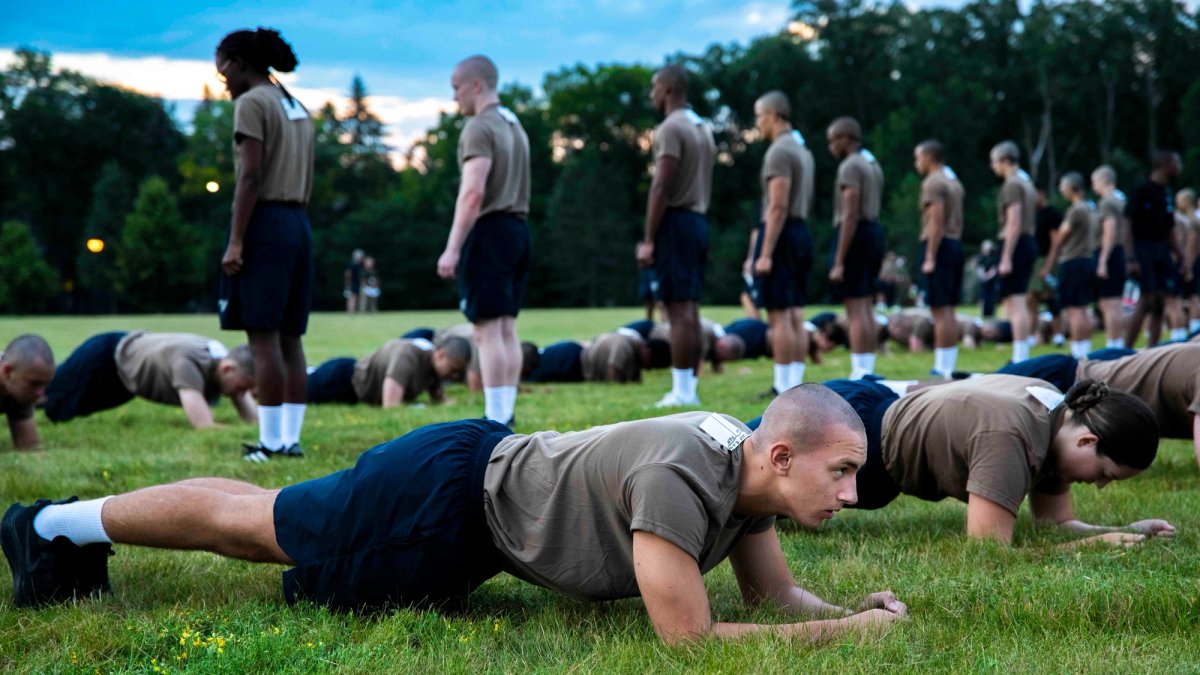
Hooyah! Navy basic training is one of the most challenging and transformative experiences a person can go through — and if you're here, you're already thinking about taking that step. Recruit Training Command (RTC) in Great Lakes, Illinois, is where civilians become Sailors, and it takes nine weeks of physical conditioning, academic testing, and high-pressure simulations to get there.
Whether you're just exploring your options or you've already talked to a recruiter, this guide covers everything you need to know: requirements, what to bring, what to expect week by week, and how graduation works. Family members, we haven't forgotten about you — scroll to the bottom for resources. Let's get into it.

Navy Basic Training Requirements
Basics
If you want to be a part of the Navy, you must meet the following basic requirements for enlisted service.
- Be between the ages of 17 and 41 to enlist
- Have a high school diploma or GED
- Pass the academic and physical requirements
- Pass an in-depth medical exam
- Meet the mental and moral standards of the Navy
- Be a U.S. citizen or a legalized permanent resident
Note: Those who are 17 years of age will need parental consent to enlist. Please also note that officer candidates do not attend basic training at RTC Great Lakes; they attend Officer Candidate School (OCS) in Newport, Rhode Island.
Physical Fitness
Navy basic training requires you to pass a baseline physical fitness test, as outlined on the Navy’s boot camp website.
There are three core steps to the Navy’s physical readiness assessment: 2-minute push-ups, planks, and a 1.5-mile run. Depending on your age group and gender, the standards are slightly different.
Push-Ups (in 2 minutes)
- Men (ages 17-19): 46
- Women (ages 17-19): 20
- Men (ages 20-24): 42
- Women (ages 20-24): 17
Planks
- Men (ages 17-19): 1:30 continuous forearm plank
- Women (ages 17-19): 1:30 continuous forearm plank
- Men (ages 20-24): 1:20 continuous forearm plank
- Women (ages 20-24): 1:20 continuous forearm plank
1.5-Mile Run
- Men (ages 17-19): 16:10
- Women (ages 17-19): 18:37
- Men (ages 20-24): 16:10
- Women (ages 20-24): 18:37
Other physical tests are also conducted, but without precise standards to reach. Applicants will need to do as many push-ups and curl-ups as possible in two minutes. If you are a recruit who is unable to meet these standards, you may still be able to pass. However, your training will be significantly delayed. If you fail multiple times, you will not be able to continue.
Which Military Branch Is Right for You?
Answer 10 questions to discover which branch of the U.S. Armed Forces best matches your personality, interests, and goals.
10 questions • Takes about 2 minutes
Swim Test
This is the Navy! You can’t get away from an intensive swim test here. During training, you’ll be categorized as either a 2nd or 3rd class swimmer. 2nd class swimmers “can stay afloat and survive without the use of a PFD indefinitely under optimum conditions.”
3rd class swimmers “can stay afloat and survive without the use of a Personal Floatation Device (PFD) in open water under optimum conditions long enough to be rescued in a man-over-board situation.” The tests for each class have slightly different criteria, but the following elements will all be tested. The exception is a 100-yard swim test, which is only administered to 2nd-class swimmers.
- Deepwater jump
- Breaststroke
- Sidestroke
- Elementary backstroke
- Crawl stroke
- Prone float
- Shirt and trouser inflation
To find out more about how each test is measured and administered, check out the Navy’s swim guidelines here.
Academics
There are several tests you must pass during Navy basic training. However, you will have already taken the Armed Forces Vocational Aptitude Battery (ASVAB) with your recruiter before you even qualify to enlist.
During boot camp, your academic classroom tests will focus strictly on Navy knowledge, such as naval history, rank structure, uniform regulations, damage control, and basic seamanship.
Medical Exam
You must be deemed physically fit in order to join the Navy. You will have to pass the Military Entrance Processing Station (MEPS) to be considered.
Don’t worry; this isn’t another academic test. Think of this more like an in-depth wellness visit with your doctor. Navy physicians will test your physical wellness to make sure you’re ship-shape for service. That consists of the following:
- Height and weight
- Hearing and vision test
- Urine and blood tests
- Drug tests
- Alcohol tests
- Joint and muscle group testing
- Full physical exam
- Interview (for mental preparedness)
- Any specialized tests required

How Long Is Navy Basic Training?
In total, Navy basic training lasts for exactly nine weeks.
The first week is mainly processing, so it’s nothing too physically intense. Week 9 is focused heavily on Battle Stations and final preparations for graduation.
Where Is Navy Basic Training?
The only Navy basic training center is located in Illinois at Naval Station Great Lakes.
Do You Get Paid for Basic Training?
This is the number one question that gets asked about all military basic training: Do you get paid for basic training? The answer is a yes!
As soon as you have boots on the ground on day 1 of Navy basic training, you will be getting paid. Recruits generally start off at a pay level of E-1, which gets them a base-level entry pay of $2,407.20.
What to Bring to Navy Basic Training?
You won’t be able to keep most personal items once you get to boot camp, so packing is the easy part, as you only have to worry about essentials. Things you HAVE to bring:
- Your social security card
- Your vaccination records
- A REAL ID, valid military ID or valid passport
- Marriage or divorce certificate (if applicable)
- Direct deposit form
- Permanent resident card (if applicable)
Here are the items that you ARE allowed to bring to basic training:
- A comb or hairbrush
- A small (ideally pocket-sized) religious book
- Pen and paper or other writing material (no bottled ink, though)
- Wristwatches
- Wedding rings
- Your personal cell phone and charger
- A single pair of prescription or reading glasses
- Cash amounting to less than $10
- One small religious item, like a medallion, as long as it is less than 2”x1”
- Prescription medication (with correct, identifying labels)
Additional items are allowed for females:
- Conservative cosmetic limited to one of each of the following: face powder, blush, lipstick, eye shadow, mascara
- Hair ties that match your hair color
- Sanitary products (pads, tampons, menstrual cups, etc.)
- Birth control medication
Things you will NOT be allowed to bring:
- Any aerosol can
- Playing cards
- Cameras
- OTC drugs
- Extra clothing
- Tobacco products
- Metal hair accessories
- Anything with alcohol in it, like mouthwash
- Anything made with glass, such as mirrors
- Lighters
- Cologne/perfume
- Shaving cream
Navy Basic Training Phases
So you may be doing research and asking, "What is basic training like?" It can be difficult if you don't go into it with the right mindset, resolve, and dedication. Your physical abilities will be tested, as will your mental capacity. You'll have to make split-second decisions in emergency simulations and learn how to really work with your fellow recruits as a team.
Navy basic training consists of physical conditioning, physical testing, academic testing, and a healthy dose of in-classroom learning.
Week 1: Processing
Week 1 is technically the easiest, as it's when you're being processed and setting up everything you need for your next two months of training. However, many sailors report week 1 as being their most stressful since it's filled with paperwork, finances, exams, and just a whole host of new things that you've never had to deal with before.
This is when you'll get your Navy clothing issued to you, be introduced to your Recruit Division Commanders (RDCs), receive your sleeping quarters assignment, and undergo a full medical, dental, and fitness screening.
Women will also receive a pregnancy test, and all recruits will be subject to a drug urine screening. On your first night, you'll be able to make one phone call to your family before turning in your device for safekeeping until your scheduled calling periods.
Week 2: Academic Testing & Teamwork
During week 2, you'll have to take your first academic test. This part is pretty easy, according to past Sailors who have gone through Navy basic training already.
You'll also embark upon a confidence and team-building exercise in an emergency shipboarding simulation. Here, you'll practice using firefighting equipment, get used to wearing your full gear, and practice using life-saving equipment in the water.
Week 3: First Aid & Physical Training
Week 3 is full of knot-tying, first aid training, and even more physical conditioning. Daily workouts run for one hour, six days a week — get used to it, because this pace continues throughout training.
Week 4: Physical Exam Prep, Firearms, and Academic Testing
In week 4, you'll be busy doing tons of exercises designed to prepare you for your physical readiness test. You'll be measuring things like sit-ups, push-ups, and running speed.
Swimming will also be tested and conditioned this week. Finally, you'll be introduced to firearm training and take your second academic test this week.
Week 5: Damage Control
Week 5 can be intensive, as it involves antiterrorism training, firefighting instructions, and even a bit of computer training. You'll usually also take yearbook photos during this week. The end is near!
Week 6: More Training
Week 6 is more of the same. You'll participate in even more physical training, firefighting drills, and conditioning exercises.
Week 7: Physical Readiness Test & Academics
Week 7 is a big one. This is when you'll take your official Physical Readiness Test (PRT) — the real deal, not just prep work.
You'll also complete your swim qualification and take your third academic test. Make sure you've been putting in the work, because these results matter for your record.
Week 8: Classroom & Battle Stations
Week 8 is rigorous. It's full of academics. During this week, you'll be sharpening your mind in the classroom and learning more skills. This all leads up to the big event of basic training: Battle Stations.
Battle Stations is an intensive 12-hour simulation that makes you rely on your swimming, survival instincts, teamwork skills, damage control, rescue abilities, and more. The simulation will have you in a replica of a guided missile destroyer responding to an attack at sea with your fellow recruits. This event is not to be taken lightly.
Week 9: Graduation
Considering you passed Battle Stations, you're now on your way to graduation. During the week leading up to graduation, you'll attend a few more classroom sessions and a bit more physical training. You'll also get the scoop on Navy career advancement.

Navy Basic Training Graduation
At the end of week 9 of Navy basic training, you'll attend Pass-in-Review, which is your official graduation ceremony where you can finally call yourself a Sailor. HOOYAH!
Recruits' families can attend the Navy basic training graduation ceremony, provided they fill out the guest security access form and pick up their tickets at the welcome center during the week leading up to graduation. Each recruit is allowed to invite 3-4 guests, depending on their training group size (children age 2 and under do not count toward the limit).
All guests age 18 and older must present a REAL ID or an acceptable alternative — such as a valid passport or military ID — to gain base access.
The Welcome Center is located at the following address: The Recruit Family Welcome Center Navy Exchange (NEX), Burkey Mall, 2650 Green Bay Road, North Chicago, IL 60088
Generally, the graduation ceremony will be scheduled as follows:
- 6:30 a.m.: The gate opens to guests.
- 7:00 a.m.: The ceremonial drill hall doors open to all guests.
- 8:45 a.m.: Guests should be seated at this time. Doors close, and no one else will be allowed to enter.
- 9:00 a.m.: The graduation ceremony begins.
- 9:20 a.m.: Divisions arrive.
- 10:30 a.m.: The graduation ceremony ends.
Family Resources
How to Contact Someone During Basic Training
When a recruit arrives on day one, personal items are safely stowed away. However, thanks to a recent policy change, recruits are now permitted to keep their personal cell phones to use during their scheduled calling periods. That means you will be able to reach your recruit on their own device when they call you. They are allowed approximately five calls throughout training.
You can also send your recruit a letter to the address that corresponds to the correct ship, which can be found here. The mailing address should look like this: SR LAST NAME, FIRST NAME, MI SHIP XXX DIV XXX RECRUIT TRAINING COMMAND XXXXXXXXXXXXXXXXXXXXXXX GREAT LAKES IL 60088-XXXX
If there is an emergency and you must contact your recruit immediately, there are avenues for you to do so. You will have to get in touch with the American Red Cross, as they can quickly send communication of emergency events to anywhere in the world, including ships. To make sure your message is sent promptly and correctly, you’ll need to provide the following information about the recruit when you call the Red Cross:
- Their full name
- Their rank
- Their branch
- Their social security number
- The correct military address (as outlined above)
If you need to contact the Red Cross to transmit an urgent message, you can find your local chapter here.
What Can I Send Someone During Basic Training?
You are only allowed to send recruits small photos and letters during basic training. This is due to limited space in the barracks. You WILL NOT be allowed to send the following items: clothing, toiletries, food, medicine, or anything else taken orally.
If your recruit has a prescription, make sure they bring enough for the full 9 weeks of training. If you send a letter or photograph to your recruit, it will generally take 5-10 days to arrive.
What to Wear to Basic Training Graduation?
You can wear just about whatever you want to basic training graduation. Wear something nice enough so as not to embarrass your recruit, but there are no policies enforcing strict dress codes for suits, dresses, or anything else. Business casual is always a pretty safe bet if you’re unsure!
Remember: It’s cold pretty much year-round up there in the Great Lakes, so regardless of your attire, you may want to pack an extra jacket or sweater!
Are you ready to become a Sailor? Get in contact with your local recruiter and get to the seas faster. Good luck in Navy basic training! Looking for more basic training guides? We have them!
Continue Reading
Marine Basic Training: Everything You Need to Know
Coast Guard Basic Training: Everything You Need to Know
Air Force Basic Training: Everything You Need to Know
Join the Conversation

Tracy Fuga
Military Spouse & Military Lifestyle Writer at MyBaseGuide
Tracy Fuga is a San Diego-based writer, editor, and marketing professional with nearly two decades of experience in content creation and communications. A former editor at MARCOA Media — the origina...
Tracy Fuga is a San Diego-based writer, editor, and marketing professional with nearly two decades of experience in content creation and communications. A former editor at MARCOA Media — the origina...
Expertise
- military spouse lifestyle
- small buisness
- entrepreneurship
SHARE: