What is a Joint Base? Locations, Facts, and More

Almost everyone who serves, served, or is/were married to someone in the military no doubt knows of the term “joint base.” But if you never spent time on one, you may only have a vague idea what it means, let alone where such installations are or what functions they fulfill. So, allow us to explain what exactly such installations are, how many currently exist, and where in this vast nation are the various joint base locations.
What Is a US Military Joint Base?
A joint base is, much as the name suggests, and many readers probably guessed, a base operated by two or more branches of the armed forces. While most US military posts are run by a single branch, these are cooperatively run installations housing units and commands belonging to multiple branches. While this may sound like a rather common-sense and commonplace type of base, given the interconnectedness of most modern military operations, their existence only dates back a few decades.
Which Military Branch Is Right for You?
Answer 10 questions to discover which branch of the U.S. Armed Forces best matches your personality, interests, and goals.
10 questions • Takes about 2 minutes
In 1993, the Department of Defense’s Base Realignment and Closure (BRAC) Commission recommended the closing and consolidation of multiple bases across the states, including the creation of three reserve bases functioning under joint command. The creation of installations formally designated as “joint bases” began with another round of recommendations from a BRAC Commission in 2005, which recommended the merging of multiple posts across the country into bases co-operated by more than one branch of the military. Since then, joint bases have become key installations housing and training American troops.

US Military Joint Base Locations & Overviews
As of now, the US military operates twelve joint installations across the country, from the Eastern Seaboard to the Hawaiian Islands. These dozen military posts stand as both testaments to the strength of the branches of America’s armed forces and the many ways those strengths complement each other when working together to support and defend the Constitution.
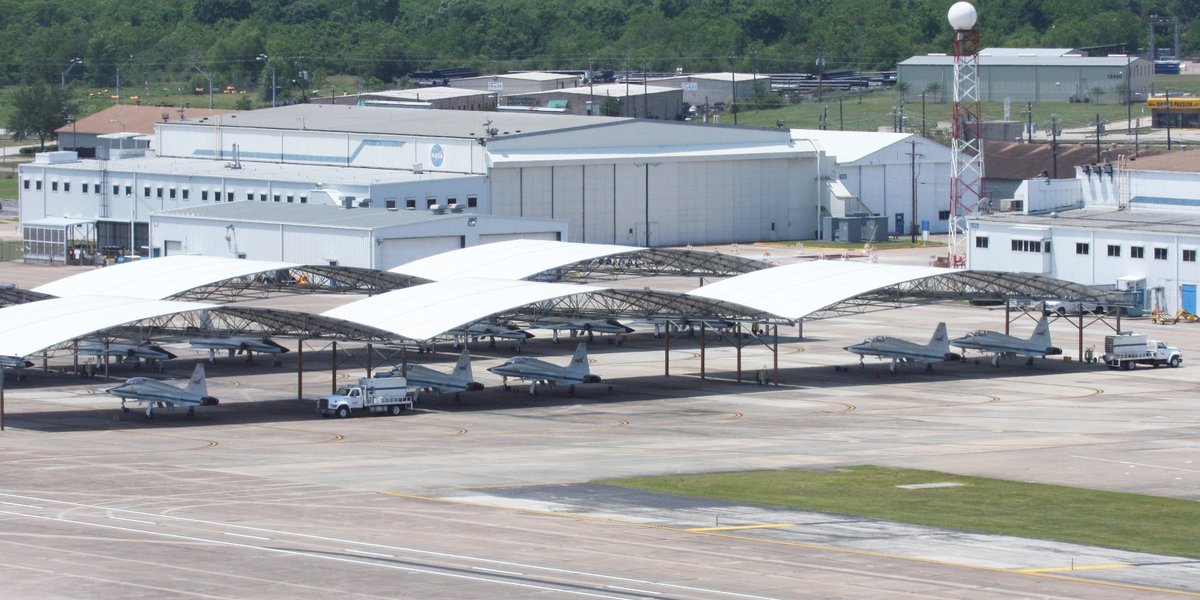
Ellington Field JRB in Houston, Texas
Contained within the combined civilian/military Ellington Airport, this Joint Reserve Base (JRB) houses reserve and National Guard units from the Army, Navy, Marines, Air Force, and Coast Guard.
The history of the base dates all the way back to 1917, when it was established as an Army Airfield named for Lieutenant Eric Ellington, an Army aviator killed in a crash in 1913.
JEB Little Creek-Fort Story in Norfolk, Virginia
This Joint Expeditionary Base (JEB) came into being in 2009 with the merging of Naval Amphibious Base Little Creek and the Army’s Fort Story. The base stretches across 4,000 acres, including over seven miles of the Virginia coast, making it an ideal place to train for expeditionary and amphibious operations.

Joint Base Anacostia-Bolling in Alexandria, Virginia
Situated just southwest of Washington, D.C., between the Potomac and Anacostia Rivers, the Navy began using the land where this base now sits as an air station all the way back in 1917.
Since then, the area served as home to aviation and support units over the decades, eventually containing both Naval Support Facility-Anacostia and Bolling Air Force Base. The DoD merged those two installations into the current joint base in 2010.
Joint Base Cape Cod in Mashpee, Massachusetts
Stretching across a large swath of land near where Cape Cod extends from Massachusetts to partially encircle the state’s eponymous bay, this base covers 22,000 acres, most of it training area.
It serves as home to units from the Army National Guard, Air National Guard, Air Force, and Coast Guard, as well as offices of numerous civilian agencies, including the Environmental Protection Agency, the US Department of Agriculture, the Federal Aviation Administration, and more.
Joint Base Charleston in Hanahan, South Carolina
Sitting just north of the historic city of Charleston, this joint base has everything from airfields to beachfront training areas to its own railroad system to move vehicles and munitions.
Created by combining Charleston Air Force Base and Naval Weapons Station Charleston, this installation serves as the home base for nearly 100,000 personnel, including troops from the Army, Navy, Marine Corps, Coast Guard, and Air Force, as well as numerous DoD civilians and dependents.

Joint Base Elmendorf-Richardson in Anchorage, Alaska
The northernmost of all America’s joint military installations, Elmendorf-Richardson’s personnel make up more than 10% of the entire population of Alaska’s largest city.
First constructed as an Army Airfield in 1940, the base now serves as home to units of the Air Force (including the Air National Guard), Army (including the National Guard), Marine Corps, Navy, and Coast Guard.
Joint Base Langley-Eustis in Poquoson, Virginia
Another base with origins in the First World War, this installation began as a pair of Army posts: an airfield (Langley Field) and a training base for Soldiers of the US Army’s now defunct Coast Artillery units in 1918 (Camp, later Fort, Eustis).
These two bases remained in operation on and off through the coming decades, with Langley becoming an Air Force Base after the establishment of that branch separate from the Army in 1947. Despite belonging to different branches, this pair of installations was combined into one in 2010.

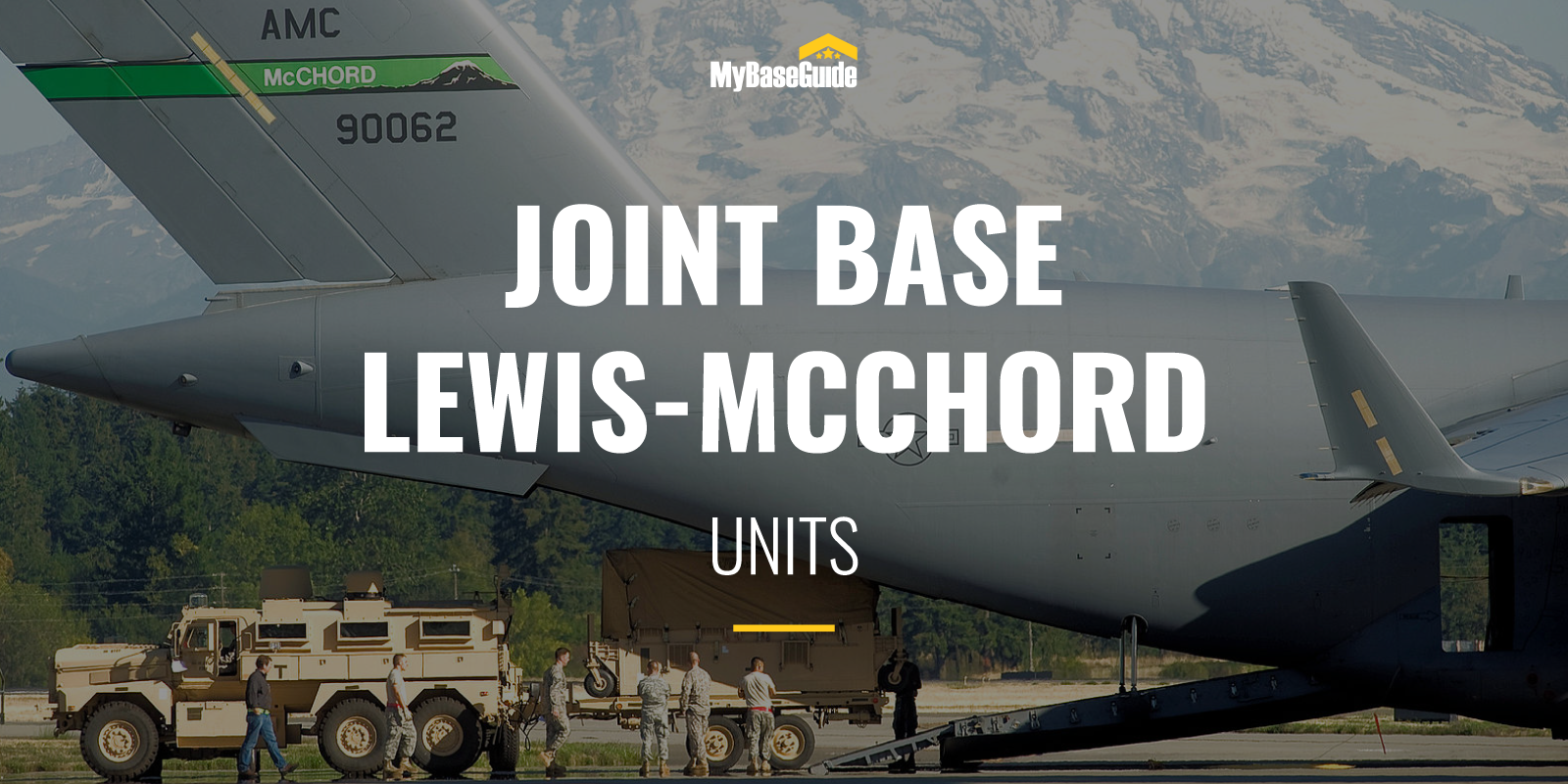
Joint Base Lewis-McChord in Lakewood, Washington
Not far from the towering peak of Mount Rainier, likely the most picturesque active volcano in the lower 48 states, JB Lewis-McChord began as a single Army base named for explorer Meriwether Lewis of Lewis and Clark Expedition fame.
The creation of the Air Force left the base divided into a post bearing its original name and an AFB named for deceased Army aviator Colonel William McChord. The DoD reunited the two installations into a joint base in 2010.
Joint Base McGuire-Dix-Lakehurst in Fort Dix, New Jersey
While every other base on this list serves as home to units from multiple branches, only McGuire-Dix-Lakehurst is categorized as a “tri-service installation.”
A base that falls under the shared command of not two but three branches of the Armed Forces: the Army, Navy, and Air Force. By combining McGuire Air Force Base, Fort Dix Army Base, and Lakehurst Naval Air Station in 2009, the DoD created a massive and vital installation with the mission of “Warfighters Supporting Warfighters.”
Joint Base Myer-Henderson Hall in Arlington, Virginia
While each joint base on this list has a rich history of its own, JB Myer-Henderson Hall may actually be the most historic of them all. Fort Myer (originally Fort Whipple) dates back to the Civil War when the Army established it (and Arlington National Cemetery) on the confiscated estate of Robert E. Lee. Since 1908, the post’s Quarters One, constructed in 1899, has served as the home of the Chief of Staff of the Army.
And on September 9th, 1908, the base began the first ever series of military test flights of a powered aircraft, a Wright Flyer piloted by Orville Wright himself. Sadly, the flights ended eight days later with a far more tragic first when the flyer crashed, severely injuring Wright and killing his passenger, the first person to perish in an airplane crash, Army Lieutenant Thomas Selfridge.
Henderson Hall, the second half of this base’s namesake, served as a Marine Corps post since 1942. It got its name from Brevet Brigadier General Archibald Henderson, aka the “Grand Old Man of the Marine Corps,” the longest serving commandant in the history of the branch. This joint base also incorporates Fort McNair (though not its name), which has served as a US Army post since 1791, making it the third oldest one in the country.
It and the other areas and buildings it grew to encompass served various purposes for various units over the years, including as a federal prison where the accused coconspirators of John Wilkes Booth were held during their trial and, in the case of four of them, eventually hanged. So, as we said, Joint Base Myer-Henderson Hall has a whole lot of history behind it.

Joint Base Pearl Harbor-Hickam in Aiea, Hawai’i
The Navy and Army (later Air Force) bases on the south shores of Oahu that merged to become this particular joint installation both date back to the late 1910s. Over the following decades, Hickam Army Airfield and Pearl Harbor Navy Base grew into two of America’s most vital military posts on the Pacific Ocean.
So vital that, tragically, they were the targets of Imperial Japan’s surprise attack on the infamous day of December 7th, 1941, that finally drew the United States into World War II. Despite the devastation and large loss of life suffered in the attack, the bases recovered and served as vital installations throughout the war and the ensuing decades until they were merged in 2010.
Joint Base San Antonio in Kirby, Texas
The DoD created JBSA by combining not one, not two, not even three, but four installations into one: the Army’s Camp Bullis and Fort Sam Houston with Air Force Bases Randolph and Lackland. Fort Sam Houston traces its roots back to the first Army garrison established in San Antonio, Texas, in 1845, meaning this base traces its origins back over 180 years.
Today, the combined post houses tens of thousands of troops across most military branches and a wide array of units and commands, from the US Army Medical Center of Excellence to the USAF’s Air Education and Training Command.
Continue Reading
Units
Welcome to Joint Base Langley-Eustis! Your New Duty Station Guide
Joint Base Lewis-McChord Welcome Guide
Join the Conversation

Paul Mooney
Veteran & Military Affairs Correspondent at MyBaseGuide
Paul D. Mooney is an award-winning writer, filmmaker, and former Marine Corps officer (2008–2012). He brings a unique perspective to military reporting, combining firsthand service experience with exp...
Paul D. Mooney is an award-winning writer, filmmaker, and former Marine Corps officer (2008–2012). He brings a unique perspective to military reporting, combining firsthand service experience with exp...
Credentials
- Former Marine Corps Officer (2008-2012)
- Award-winning writer and filmmaker
- USGS Public Relations team member
Expertise
- Military Affairs
- Military History
- Defense Policy
SHARE: